
In August, Richard took on a tandem skydive from over 10,000ft and raised over £2,100 for KAB. After losing his sight in 2024, life changed dramatically, but thanks to KAB’s support, Richard says he now feels hopeful for the future and that anything is possible.
You can still support Richard on his JustGiving page.
Here’s an extract, in Richard’s own words, from his JustGiving page:
I lost my eyesight in 2024 due to a hereditary condition. It was the hardest thing I have ever had to tackle in my life.
I lost my ability to do every day tasks that I took for granted. Things like cooking, crossing the road, working, using my phone. I have a niece who was born after I lost my sight and I know I will never see her face.
KAB and all their brilliant services have given so much back to me. I have access to the world again. They have taught me to cook, have given me access to helpful technology and provided counselling to help with the trauma of losing my eyesight.
Do your own fundraising challenge
We have a big range of challenges you can take part in, from skydives and inflatable runs to treks and marathons.
Owen, who was registered as partially sighted last year, took part in three challenges in aid of KAB. This included 60km in his wheelchair, a 5K and a Superhero Series Triathlon at Windsor, where he met up with our Vice Chair of Trustees, Hazel Groves.
Owen tells us:
I really enjoyed doing my triple challenge for KAB. I like that I can show people that just because you have a disability, it doesn’t mean you can’t do anything you put your mind to. I like changing people’s perceptions, and I do it with pride and a smile.
Owen’s fundraising page is still open, if you wish to donate: Owen’s JustGiving page
Do your own fundraising challenge
We have a big range of challenges you can take part in, from skydives and inflatable runs to treks and marathons.
Charles Bonnet Syndrome (CBS) is a condition that affects people with sight loss, causing vivid, visual hallucinations.
While these hallucinations are silent and not linked to any mental health condition, they can be deeply upsetting. The eye is the camera and the brain interprets what is being seen, but as sight is lost, the brain is left with nothing to interpret, so creates images. People may see anything from colours, insects or animals, to figures from the past or whole scenes. These images will vary from person to person and can happen just once or much more frequently.
Scott became a CBS Champion through his work as an Eye Clinic Liaison Officer. He tells us:
I found this eye condition fascinating and wanted to learn more so that I could better support people. I provide advice to my KAB colleagues and collaborate with the UK charity Esme’s Umbrella, which raises awareness and offers support for people with CBS.
Not everyone living with sight loss experiences CBS, but due to fear or stigma, many don’t report their symptoms. “People can be frightened to leave the house or even look out the window,” he says. “It’s emotionally distressing, but understanding it can make a real difference.”
Scott supports KAB clients by identifying triggers, offering coping strategies such as distraction techniques, and signposting to counselling or medication reviews where needed. If you need support or advice, please contact KAB.
Diabetes is a condition that causes your blood glucose (sugar) level to become too high.
Knowing the signs and symptoms
The most common symptoms are increased thirst, going for a wee a lot, feeling very tired and losing weight without trying. These symptoms can affect anyone – adult or child.
If you have any diabetes symptoms, it’s important to contact your GP and ask for a blood test for diabetes.
Prevention
It’s not possible to prevent type 1 diabetes because it’s usually caused by a problem with your immune system (autoimmune condition).
You may be more likely to get type 2 or gestational diabetes because of your weight, age, ethnicity, or if other people in your family have it.
You can sometimes reduce your risk of getting type 2 and gestational diabetes by making lifestyle changes such as:
- eating a balanced diet
- exercising regularly
- maintaining a healthy weight
Eye screening
If you have diabetes, it’s extremely important to attend your annual diabetic eye screening appointment, so that changes with your eyes can be identified.
I truly don’t know where I’d be in life right now if if wasn’t for KAB.
View the photos below:

When Tony was registered blind in 1999, he did what many people in his position do, he simply got on with life. Diagnosed with Retinitis Pigmentosa and macular scarring, he quietly made adjustments at home and at work, without seeking help. He recalls:
I didn’t want to wear a badge that said I was visually impaired. Even as a lay minister, my congregation had no idea how bad my sight was. I just found other ways to manage.
For years, Tony managed with limited vision; avoiding bright days, relying on taxis, or staying indoors. Then, earlier this year, something shifted.
“I attended a Church of England course where a visually impaired speaker shared his story. As he spoke, I felt like he was describing my life – his experiences, his reluctance to get help, even his decision to try a cane. That planted a seed in my mind.”
That seed took root a few months later. “I couldn’t go outside because of the light. That’s when I realised how isolated I’d become. So I called KAB again.”
What followed, Tony describes as life-changing.
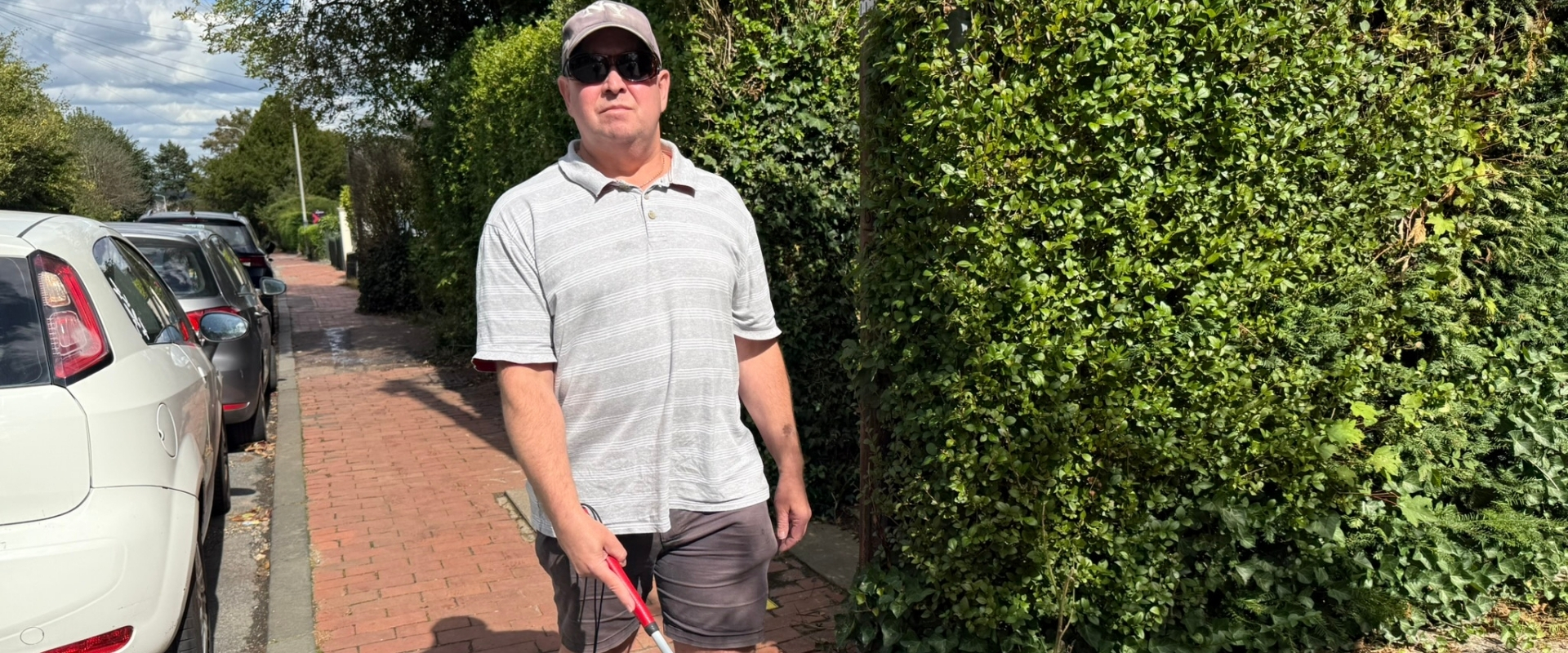
A visit from a KAB staff member introduced him to tools and support he’d never explored. “They gave me overspecs to reduce glare, a liquid level indicator for pouring drinks, talking scales to help manage my diabetes, and the Seeing AI app, which reads text aloud,” he says.
But the real turning point was mobility training. Equipped with a long cane and new skills to navigate safely, Tony now goes out independently.
I learned safer routes into town, how to identify hazards, and how to move with confidence. It’s given me back control of my life.
Now, with the right tools and support, he’s not just more open about his sight loss – he’s embracing life in new ways.
Looking ahead, Tony is filled with hope.
The future starts now. I feel liberated. I don’t have to plan my day around the weather or rely on someone to take me out. There are still challenges, but there are so many more possibilities.
We are delighted to announce the appointment of Avril Langman-Heath as the new Chair of Trustees at Kent Association for the Blind. Avril takes over the role from Hazel Groves, who has served the organisation with dedication and care as Chair of Trustees for the last 5 years; Hazel will stay on as Vice Chair.
Avril joined the KAB Board of Trustees in 2024 and quickly made a positive impact, leading to her appointment as Vice Chair soon after.
Bringing a wealth of experience from a successful career in banking, finance and operations, Avril combines professional expertise with a deeply personal connection to KAB and the challenges faced by people living with sight loss.
We caught up with Avril to find out what she’s most looking forward to in her new role:
My late mother was severely sight impaired and a client of KAB’s for a number of years. KAB were a huge support to both her and myself and I am delighted to be able to bring both my professional expertise and lived experience and continue to support KAB as Chair of the Board of Trustees. The charity plays a vital role in helping to provide confidence and independence to so many people who are visually impaired. I’m excited to work with the Board, staff, volunteers, and supporters to build on the incredible work already being done and to help shape the future of KAB.
We warmly welcome Avril into her new role and look forward to the continued growth and success of KAB under her leadership.
KAB Connect is a newsletter sent twice a year to our clients and supporters. We have two different versions.
One is specifically for people we support, giving them useful information about products and services that may help them. We also share our top tips on how to live more independently.
Our other newsletter is specifically for our supporters, sharing news about what we’ve been up to and how we’ve been supporting people.
The latest issues of KAB Connect are available to download in a variety of different formats below:

Newsletter for people with a sight impairment
With features including: accessing KAB’s social groups, next Service User Forum dates, Sight Matters Exhibition in Bromley, helping you find technology with the Tech Selector, KAB events (including Iris vehicle travelling around the county) and the importance of writing your will. Don’t miss Steve’s story about how a headset enabled him to see his colleagues and Rosheen’s experience of using a Guide Communicator.
This newsletter is in large print 18pt. This issue is sponsored by VisionAid.

KAB Connect supporter newsletter
Download KAB Connect, with articles including Steve‘s story about how a headset enabled him to see his colleagues and Rosheen‘s experience of using a Guide Communicator. Don’t miss taking part in KAB’s Golf Day in September this year and be ‘in’ to ‘win’ big with KAB’s Lottery.
This newsletter is in standard print size 12pt.
Other formats
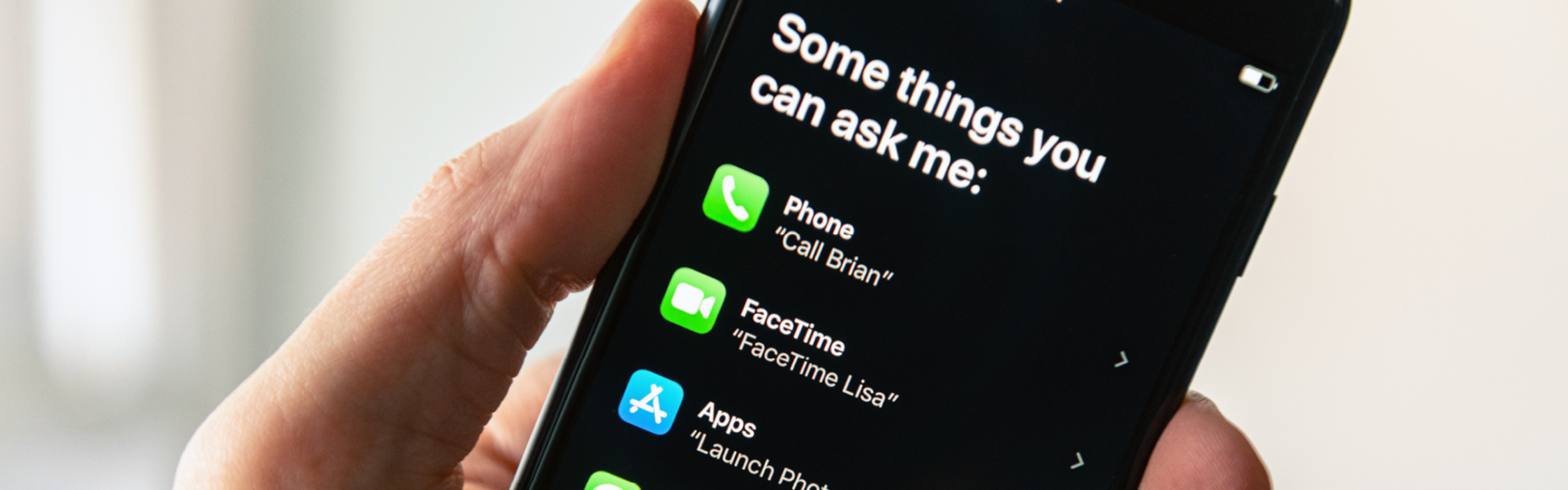
Independent living tips and advice
We have put together a range of tips and advice to support your independent living. You can access all our advice, as featured in our KAB Connect newsletters, by visiting our help and advice pages.
Rosheen accesses the Guide Communicator service and tells us how this is benefitting her.
When I was just 12 years old, I was diagnosed with Glaucoma and Myopia. Over the years, my vision has gradually deteriorated, leaving me with no sight in my left eye and extreme tunnel vision in my right. Tasks like reading my post became increasingly difficult, and I didn’t want to turn to my Mum or sister all the time.
I knew I needed help, so when I discovered KAB’s Guide Communicator service, I signed up. It’s been one of the best decisions I’ve ever made.
Every two weeks, I meet with my Guide Communicator, Andi, for two hours. The support he provides is invaluable. Today, for example, he’s helping me read my mail. Later, we’ll prepare meals for the week ahead, which allows me to stay independent. Sometimes we go shopping together, which is a real help finding everything I need and identifying expiry dates.
The difference Andi’s support makes in my life is huge. It keeps me more independent and helps me stay on top of everyday tasks without needing to rely on others. The service isn’t just practical – it’s a source of joy too. We laugh together, share stories, and make sure my life continues moving forward, no matter the challenges my sight loss may present.
Get in touch to find out more about the service and the support we provide. This is a paid for service but you may be eligible for financial assistance from your local authority. Get in touch on 01622 691357 (select option 2) or email deafblind@kab.org.uk
Steve is KAB’s Assistive Technology Worker for the West Kent area. Steve shares with us his experience of technology, and how it has helped with his sight impairment, at a recent technology demonstration day.
Here at KAB, as part of my job role, I often attend demonstration days from the companies that kindly lend us equipment for our centres and for Iris Mobile Sight Centre.
Last year, VisionAid came in to demonstrate lots of good tech for our clients, however nothing that would change things for me personally. I have been trying out various magnifiers since primary school, but nothing has really helped my particular sight loss. VisionAid then started to demonstrate the AceSight VR. This is a headset with a built-in camera magnifier.
I decided to have a go myself, as they told me that it could help with things like reading, seeing faces and watching TV. It is similar to a gaming headset but without the sound!
The demonstration of the device made a huge impact…
After a few seconds, I could see a mass of red in front of me. These strange red things were my work colleagues. I then realised that they were waving to me. These are people I see every day, but have never really seen.
The moment was amazing. I don’t often think how much I miss out on by not seeing what people look like, as I am so used to it. But I felt so much closer to everyone now I could see what they look like.
I looked outside and saw cars in detail, normally just a blurry mist. I then read a small business card. Usually I am unable to read very much, just very large letters. However, I could read the smaller text. Reading was still slow, as I have not read text that small for a very long time…if ever.
For me, this is a great device, which I would love to get one day! It is not suitable for everyone; you do require at least a small amount of vision to benefit from it. It doesn’t enable you to suddenly see again! However, the small camera built into the unit may enable you to get the best from your surroundings. I would recommend requesting a demonstration from VisionAid before considering this.
Visit VisionAid’s website: https://www.visionaid.co.uk/acesight-vr