50% of sight loss is avoidable, so why don’t people look after their eyes?
Our Love Your Eyes campaign aims to raise awareness of the importance of eye health, encouraging people to get their eyes checked at least every two years.
Do you put off getting your eyes checked?
Eye conditions and other health problems can be detected in the early stages through regular eye tests at least every two years. An eye test could detect treatable eye conditions up to four years earlier.
Yet many people don’t get their eyes tested until their eyesight deteriorates. So don’t lose sight of what’s important. Show your eyes some love and book an eye test today!
Lily was just 6 when a routine eye test led to the discovery of a tumour in her brain.
The importance of an eye test
Lily’s Mum explains how one test changed her life. “We didn’t think anything was wrong with our children’s eyes, but thought it was time to get them tested. When the optician referred Lily to the hospital for further checks, we didn’t realise how serious the situation was. The MRI picked up the brain tumour and she was operated on a few days later. The tumour had been there from birth, pushing on her optic nerve, and her sight was deteriorating. I can’t think about what could have happened if we hadn’t got her eyes tested.”
Lily has no sight in her right eye and is partially sighted in the other. Kent Association for the Blind has supported Lily to use a cane to help her get around at school. “They were particularly amazing when she was at primary school,” says Sinead, Lily’s Mum. “They really transformed the school’s environment, such as improved lighting and coloured paint on the steps. That wouldn’t have happened if it wasn’t for KAB’s involvement.”
An eye examination is not just about new glasses but also checking the health of the eye. The eyes have been described as the window to the soul but in reality, they’re a window to the body’s nervous system and a great way to see what else is going on in the body – not just the eyes. Conditions such as raised blood pressure or cholesterol can be detected as well as diabetes.
Scott Jones, Eye Clinic Liaison Officer
Don’t lose sight of what’s important
Eat healthily
Eating a diet rich in green leafy vegetables such as spinach, kale and broccoli and fruit such as oranges and kiwis may delay the progress of cataracts and age related macular degeneration. People who are obese can increase their risk of developing diabetes, which can cause sight loss.
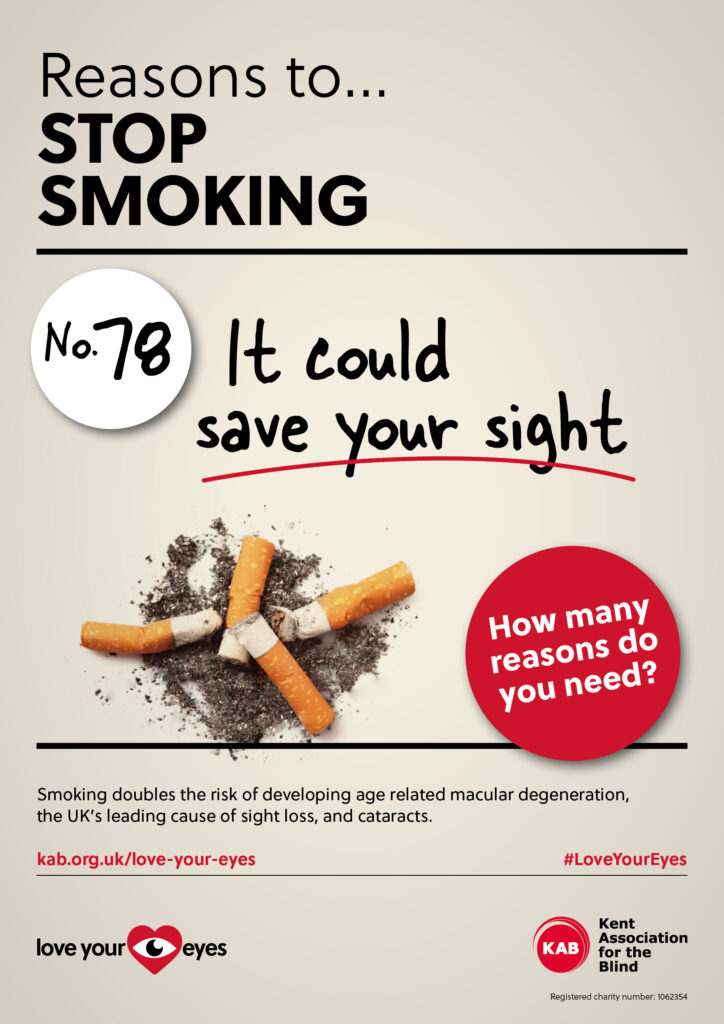
Stop smoking
Smoking doubles the risk of developing age related macular degeneration and cataracts. There is much awareness about the links between smoking and lung cancer, yet little understanding about the links to eye conditions. There are many reasons to give up smoking – don’t lose sight of what’s important.
Wear UV sunglasses
Long term UV exposure has been linked to eye conditions such as age related macular degeneration and cataracts. Wear sunglasses with a safe level of UV protection (UV400) and carry a CE kite mark or British Standard British Standard BS EN ISO 12312-1.
Get your eyes checked
Eye conditions and other health problems can be detected in the early stages through regular eye tests at least every two years. An eye test could detect treatable eye conditions up to four years earlier. Ask your local opticians for more information.
Top tips for good eye health
Our Eye Clinic Liaison Officer, Scott Jones, has some great tips for looking after your eyes – such as nutrition, lifestye and eye drops.
We have a range of posters to get people thinking about their sight. To find out more, get in touch.
#LoveYourEyes
This website uses cookies to improve your experience. We'd also like to set optional analytics cookies to help us improve it. We won't set optional cookies unless you enable them by clicking the 'Accept' button. Cookie settingsACCEPT
Privacy & Cookies Policy
Our use of cookies
We use necessary cookies to make our website work. We'd also like to set optional analytics cookies to help us improve it. We won't set optional cookies unless you enable them by using the toggle button below. For more information on how these cookies work, please see our Privacy Policy page.
Necessary cookies enable core functionality such as security, network management and accessibility which are essential for the website to function properly. These cookies do not store any personal information. You may disable these by changing your browser settings, but this may affect how the website functions.